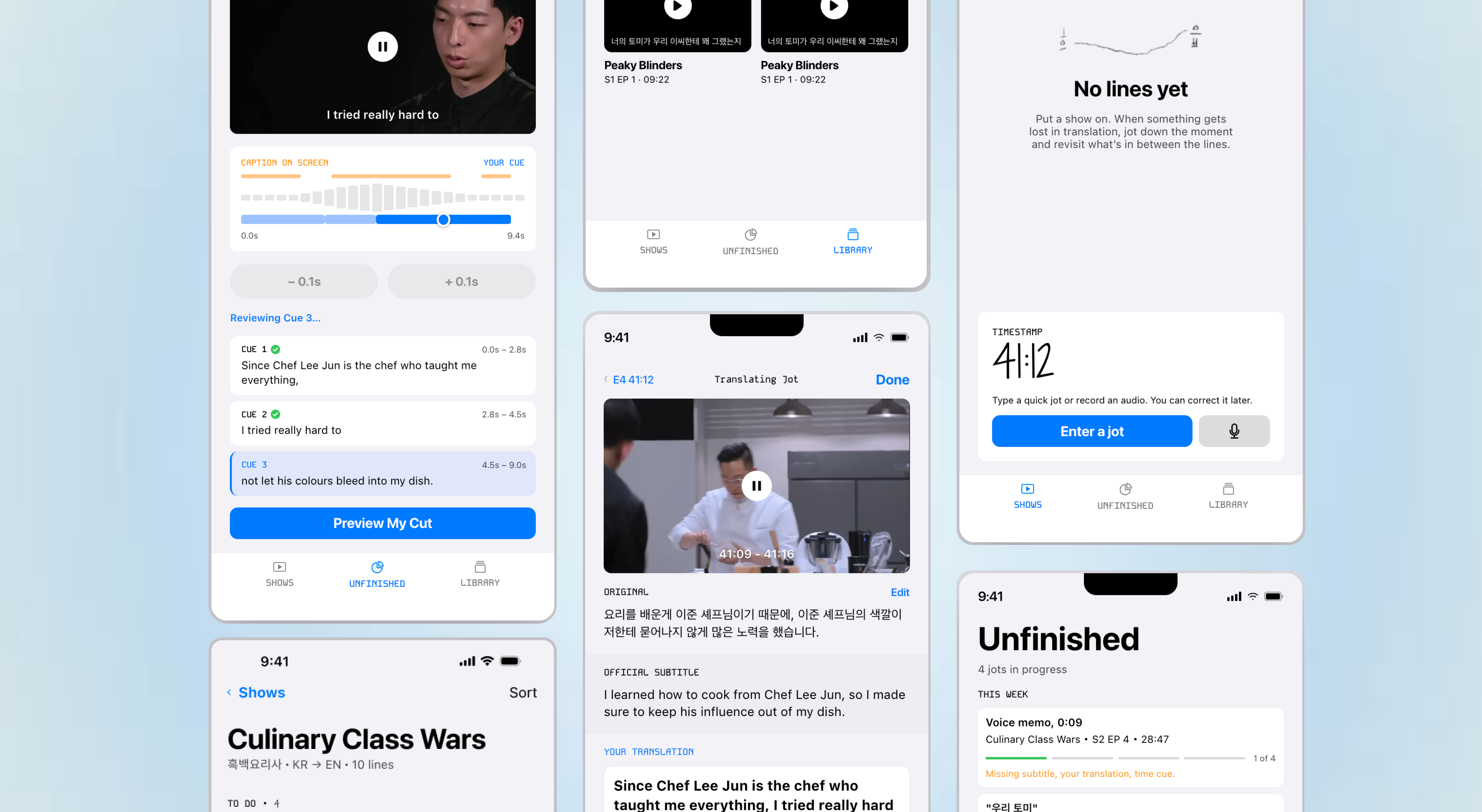
A translation experience for viewers who want more than just the words.
As a bilingual speaker, I noticed a recurring gap in translation: subtitles can be technically correct while losing the tone, context, and nuance behind the original. Deference, sarcasm, or a specific kind of tenderness can easily get flattened in translation.
Between the Lines lets you capture the exact moment a subtitle loses something, without pausing your show to do it, and come back later to fix it properly: rewrite the line, time your own caption to the frame, and keep a version that actually sounds like what was said.
Official subtitles are written for speed and legibility, not nuance — a reasonable tradeoff for a subtitling studio, and a bad one for a bilingual viewer who can hear the gap.
Sarcasm, deference, humor, tenderness, etc don’t always survive a direct translation.
The meaning of a phrase can change depending on cultural or conversational context.
A natural English subtitle can give away the meaning before the original dialogue reaches it.


To go beyond my personal experience, I spoke with bilingual viewers, observed real viewing behaviors, and analyzed subtitle patterns across Korean, German, Spanish, and Chinese to understand how people notice, process, and respond to differences in translations.
recognized when a subtitle was technically correct but didn’t sound natural or emotionally equivalent.
relied on their knowledge of the other language, cultural context, and situational cues to interpret meaning.
felt that subtitles revealed key information earlier than the original dialogue, especially in languages with different sentence structures.
The likelihood of noticing a timing difference often depends on how the source language structures information. Languages like Korean and German tended to produce more noticeable timing shifts, while Spanish and Chinese were similar to English translations.
Experience the same phrase across Korean, German, Spanish, and Chinese, and see how its meaning, tone, and timing change in English. Switch between languages to explore what gets preserved, what gets lost, and what changes along the way.
Let viewers save a moment that feels unclear or should be re-evaluated.
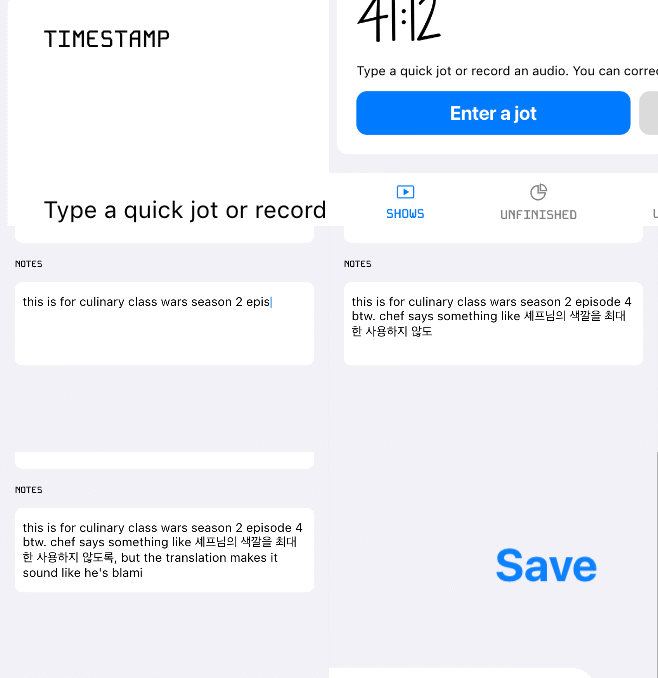
Give viewers space to explore their own meaning, context, and notes.
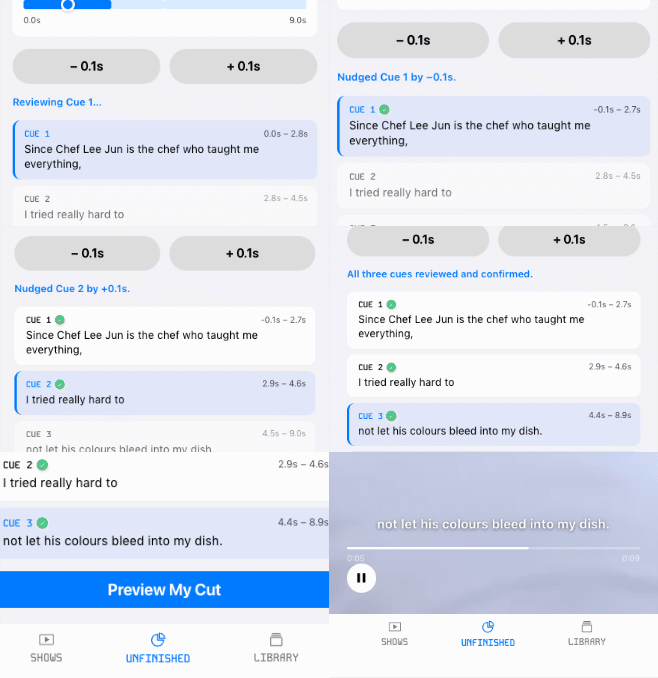
Let viewers decide when and how the translation should appear.
Between the Lines reimagines translation as something more than a direct conversion of words. It gives bilingual viewers a way to capture the moments that feel off, use AI to find them again, and shape their own translation around tone, context, and timing.
When you notice a line that feels needs a better translation, you can quickly jot down a timestamp and a quick note. You don’t need the exact quote, but just enough for you to remember for later.
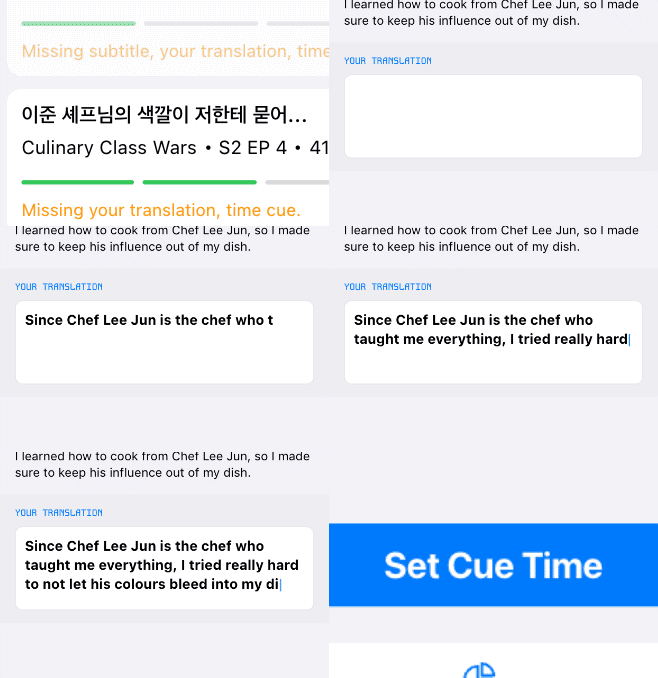
Once you save a timestamp and quick note, Between the Lines takes over. If you’ve connected your Netflix or YouTube account, it searches your viewing history and subtitles to identify the scene you were trying to remember, without asking you to search for it yourself.
Review the original dialogue and subtitle, then refine the translation in your own words. You’re in control — edit, adjust, and make it say what it actually means to you.
Choose exactly when your translation appears. Adjust the timing to match the moment so you can understand the scene in context, without interrupting the experience.
As a bilingual viewer, I found myself noticing moments where subtitles were technically correct, but something about the meaning felt off. As I explored the problem further, I realized this wasn’t only a bilingual experience. Viewers who don’t speak the original language can also lose tone, context, and cultural nuance in translation, without ever knowing what was missing.
What began as a personal frustration became an exploration of how we can design translation to preserve more of what makes a moment meaningful.
AI is most useful when it handles the work people don’t want to do, finding the right scene, reading subtitles, etc. But always leaving interpretation and the final decision to the human.
A translation can be accurate and still change how a moment feels. Exploring cue timing showed me that when something is revealed can matter just as much as what is said.
Designing around quick capture, background matching, and returning later helped me think about how products can fit around existing behaviors instead of interrupting them.
A little look into how I think, make, and design. Thanks for being here.